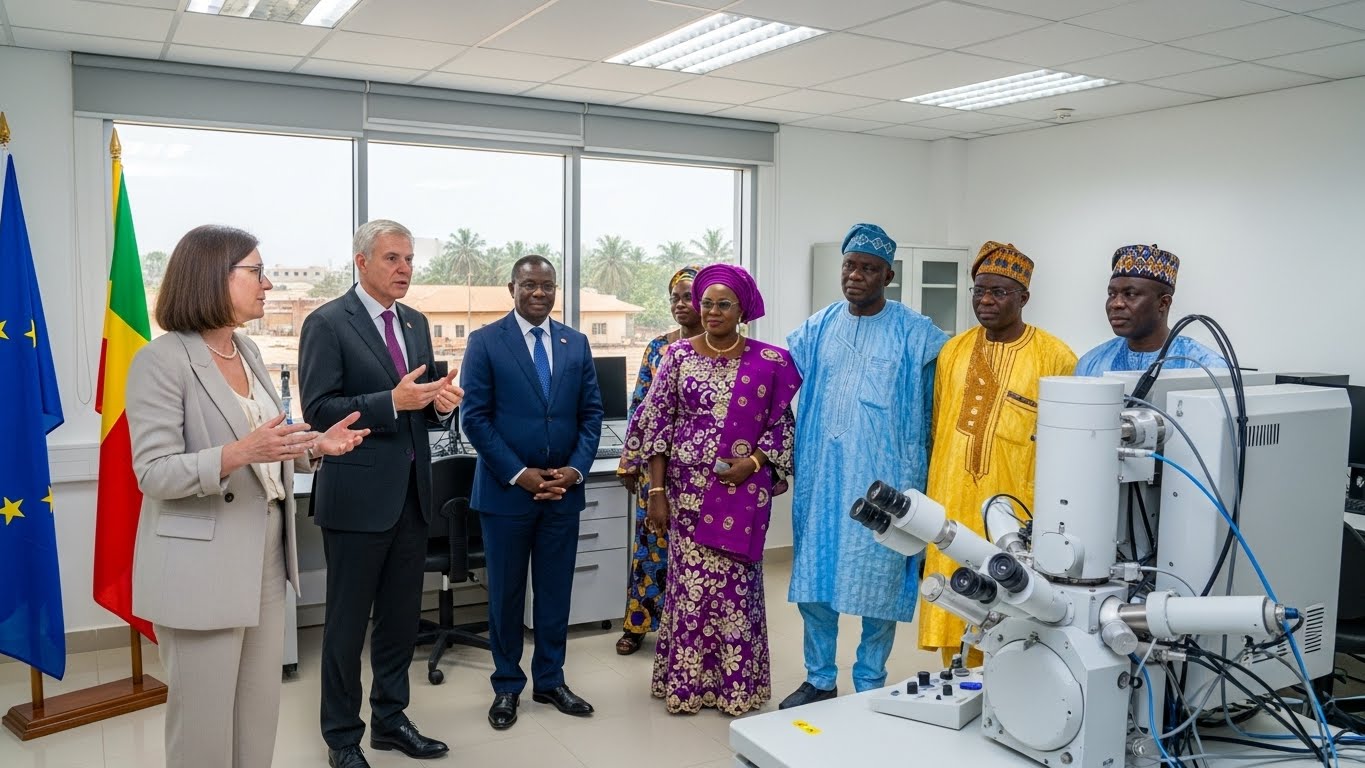
In a significant boost to Benin’s public health infrastructure, the Benin Agency for Pharmaceutical Regulation (MOHBENIN) recently received advanced laboratory equipment funded by the European Union. This handover ceremony, attended by representatives from the EU delegation and MOHBENIN officials, marks a pivotal step in enhancing the country’s ability to ensure the safety, efficacy, and quality of medicines and health products.
The donated equipment includes state-of-the-art tools such as scanning electron microscopes and mass spectrometers, designed for precise analysis of pharmaceutical samples. These instruments allow MOHBENIN’s laboratories to conduct detailed quality control tests, detecting impurities, counterfeit substances, and substandard formulations with greater accuracy than ever before.
The Handover Ceremony: A Symbol of International Partnership
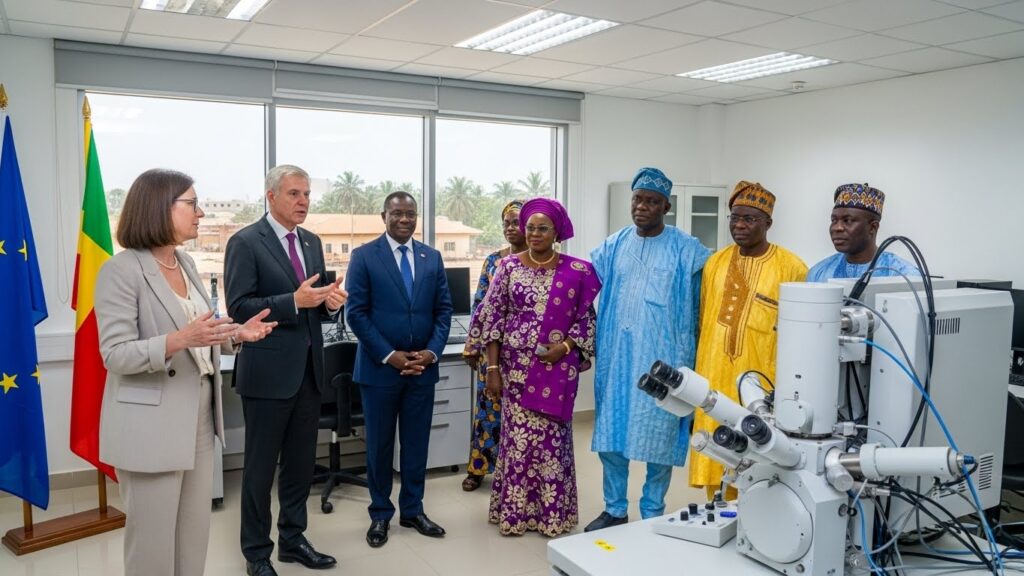
The event took place in one of MOHBENIN’s modern laboratories in Cotonou, where EU delegation members presented the equipment to MOHBENIN leadership and laboratory staff. Attendees included officials in formal attire alongside scientists in white lab coats, underscoring the collaborative spirit between Europe and Benin. The presence of both the EU and Benin flags highlighted the strong bilateral ties in health sector development.
This initiative is part of the EU’s broader support for pharmaceutical regulation in West Africa, aligning with global efforts to combat counterfeit medicines—a persistent challenge that affects millions across the continent.
How the New Equipment Boosts Quality Control in Benin
Prior to this donation, MOHBENIN relied on limited resources for testing imported and locally produced health products. The new advanced tools dramatically improve capabilities:
- Scanning Electron Microscopes (SEM): These provide high-resolution imaging of sample surfaces, essential for identifying microstructural defects in tablets, capsules, and medical devices.

- Mass Spectrometers: Critical for molecular analysis, they enable precise identification of active ingredients and contaminants, ensuring compliance with international standards.
With these enhancements, MOHBENIN can now perform more comprehensive pre- and post-market surveillance. This means faster registration of safe medicines, quicker detection of substandard or falsified products, and stronger pharmacovigilance—monitoring adverse effects in real-world use.
The impact extends beyond the lab: By raising testing standards, MOHBENIN helps protect Beninese citizens from harmful products, builds trust in the pharmaceutical supply chain, and supports local industry growth.
Broader Implications for Public Health in Benin
Counterfeit and substandard medicines pose a major threat in Africa, contributing to treatment failures and antimicrobial resistance. MOHBENIN’s upgraded facilities directly address this by enabling rigorous market inspections and rapid response to alerts.
This EU-funded support also aligns with Benin’s national health priorities and regional harmonization efforts under organizations like UEMOA (West African Economic and Monetary Union). It empowers MOHBENIN to authorize clinical trials, inspect facilities, and regulate imports more effectively.
Looking ahead, these tools will facilitate training for local scientists, fostering long-term self-reliance in pharmaceutical regulation.
The collaboration between the EU and MOHBENIN exemplifies how international partnerships can drive tangible improvements in healthcare access and safety. As Benin continues to modernize its regulatory framework, initiatives like this ensure that quality medicines reach those who need them most.
For more information on product registration or to report suspicious medicines, visit the official MOHBENIN website or contact their offices in Cotonou.